Sunday, March 6, 2011

"The House Guest"

Paranormal, Mystery, Thriller, Raging fire, Character deaths, shocking admissions, shocking returns and what more.....a perfect normal everyday recipe for a perfect TVD episode, a perfect explanation for 2x16 episode The House Guest.


Before we discuss a certain Vampire mum's return, we should get down to business as to the other aspects of the episode. For one i'm sure the Mystic Falls population is sure going to be more effected by the lose of Mystic Grill in this episode than the actual loss to people of the town.


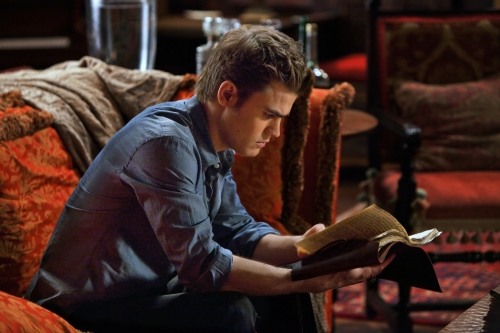
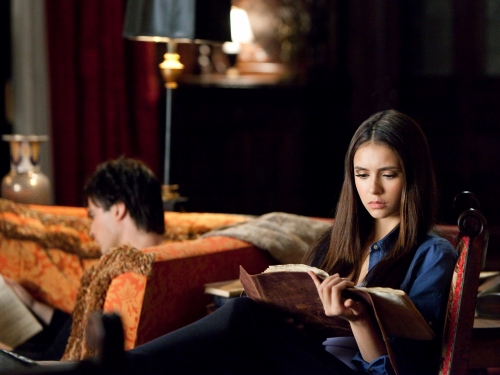
The episode wasted no time getting into the action, as we opened on Katherine inside the Salvatore mansion, Damon explaining how she escaped the tomb and Katherine trying to explain why: she wants Klaus dead. She knows what he looks like, she knows where he is, they need her. Don't you just love when she is right?!?


Does anyone else think it weird that Stefan apparently can’t tell Katherine and Elena apart any more? It used to take him a while, sure, but he figured it out in the end. Now it’s not as easy. I still think he’s going to end up doing the dirty with Katherine at some point, whether he knows it or not. He’s really a great counterpoint to Damon, whose heart keeps getting stomped on by his vampiric ex-lover. Note to Kat: you might wanna stop reminding him how much you don’t want him, sweetheart. Note to Damon: to be honest, I wouldn’t have kicked her out of my bedroom, so more power to you, dude.


We of course learn all about Katherine's scheming and the true reason she stayed behind.  I had to rewind her rundown of the deal with John to Damon, but as I best understand it: He showed up at the tomb at the conclusion of "Daddy Issues" and told Katherine he and Isobel wanted the Salvatores out of Elena's life. Katherine could assist. In exchange for helping them kill Elijah, she could save one brother. She chose Stefan. For that reason, Uncle/Daddy John gave Damon the dagger and Katherine never revealed to him the fate that would befall any supernatural who used it.


Now,  if Katherine had selected to save Damon, John would have given Stefan the dagger... right? As Katherine herself joked earlier in the episode, likely as a wink to viewers: "So many rules. It's all very confusing." Where is all this going? With Isobel's arrival, it's difficult to say. But one thing is for certain that Katherine truly didn't care if he died - she actually plotted his death! - it also looks like Damon has finally gotten over his centuries-old crush. Way to go, Damon - you big boy! Might his feelings for Elena actually dissipate now, though? Originally, at least, they were tied into her resemblance to Katherine.


Lets now look to another important point in the episode.....the warlock duo father & son.....were great additions to the show and they left us at the perfect time, in the perfect way: via surprising deaths that will likely play a major role going forward. After all, the Gilbert journals spoke of a witch massacre in Mystic Falls, along with the super power one can derive from a witch burial ground. Or simply the site where a witch died in a violent manner. Hmmm, what two locations now fit that bill? The Salvatore household and the Gilbert household.Come on in, Klaus, we'd love to show you around! Might those be the words of witch wisdom Jonas imparted to Bonnie? Lure Klaus in, do some serious spelling and take advantage of the way in which he and his son perished cause Jonas' last-breath grab of Bonnie was definitely very very creepy.


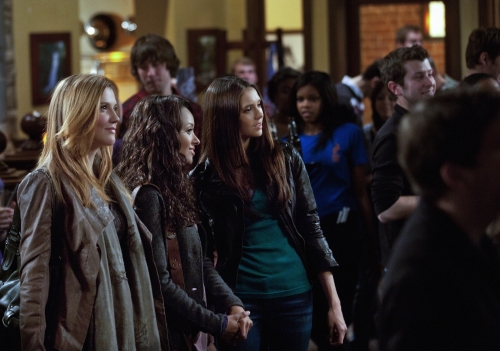
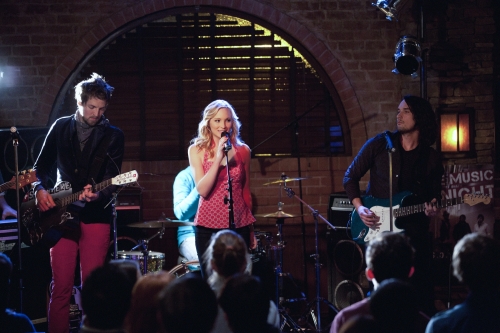
OH MY GOD......CAROLINE a.k.a. CAN SING & SHE WAS GREAT.


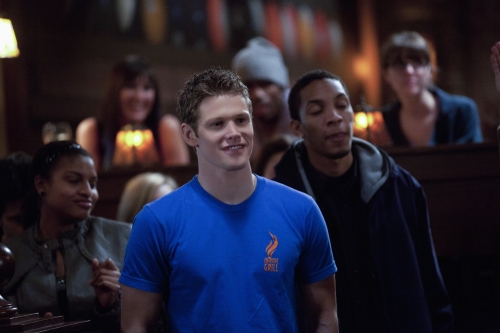
Matt. Poor, confused, innocent, would-have-died-if-not-for-the-blood-of-his-vampire-girlfriend, Matt. I loved his reaction to Caroline's revelation, specifically the call back to Vicki. It makes perfect sense he'd be especially sensitive to the whole vampire thing.

Although it’s the crux of the series right now, I can’t wait for this Klaus storyline to be done, over, finito. The slate needs to be cleared somewhat so we can appreciate the great storytelling that The VampireDiaries has at its core.
There are no new episodes until April 7th, what the deal with this month long wait for the next episode?? Next episode would be "KNOW THY ENEMY"

Share/Bookmark

Saturday, March 5, 2011

"The Rachel Berry House Party Train Wreak Extravaganza" is officially underaway!!

Again i'm sorry for a late review. Saw the episode long time back but important tests were coming up so I couldn't write it. So, here it goes


Did you know what over 400 people die per year from alcohol poisoning? And drunk driving is really bad? If you weren't aware of these facts, Glee made it a mission to drive the points home on "Blame It on the Alcohol." Fortunately, there were enough fun songs and scenes thrown in so that the episode didn't feel too preachy. Finally an episode that was fun and huge definition of racy and also made a good point of warning against alcohol.

There's no way for a series to not come across like a Public Service Announcement when the topic is alcohol. This can be especially grating because alcoholism is a serious disease. It's silly, and almost insulting, to suddenly pretend like Will has such a severe problem that he has to actually give up imbibing simply because he left one drunken message. Moreover, high school students will party and drink and vomit and repeat the process for as long as there is liquor and empty basements. They shouldn't get behind the wheel after doing so and they should be careful sexually and etc etc etc........


Good thing they did not preach it and actually made it like kinda funny and enjoyable outfits (what were Kurt and Rachel wearing to the party?!?) and catchy performances (so nice to see the show go western for a change!). It's hard to take too much of an exception to an episode that gives us Beiste in a cowboy hat.

One complaint though: their is  no way Finn knows the word "archetypes." The "The Weepy Hysterical Drunk, The Angry Drunk, The Stripper Drunk, The Happy Drunk, and The Needy Girl Drunk" part was just extreme since Finn is shown as a stupid boy with very low intellect. 


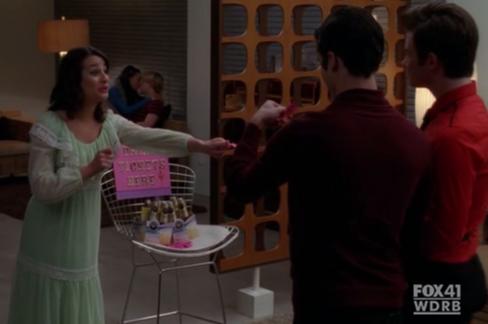
Speaking of train wrecks, the “Rachel Berry Train Wreck House Party Extravaganza” got off to a slow start, but things quickly got crazy after the kids decided to bust into Rachel’s dads’ liquor cabinet. The spin the bottle kiss between Rachel and Blaine was surprisingly intense and led to an awesome duet of “Don’t You Want Me.” It reminded me a little bit of the days of Rachel and Jesse St. James (when the hell is Jesse coming back on Glee????), and hopefully Glee will find a way for Rachel and Blaine to sing together again. The unexpected kiss also led to Blaine briefly questioning his sexuality. I was sure Rachel the drama queen would freak out on Blaine after he declared “Yep, I’m gay. One hundred percent gay” but she was excited to channel the experience into her songwriting. Good for her!


I was on Kurt's side in his initial argument with Blaine during the argument later. Yes, a friend should be understanding, but Blaine absolutely billed himself as a confident, out, proud, sure homosexual. Of course it was jarring for Kurt to learn that his role model in this area doubted his sexuality. But then Kurt got on my nerves when arguing with his father. Didn't Burt say he'd also object to Finn having a girl sleep in his bed? Wasn't he instituting the same rules for both gay and straight? Kurt left the conversation by telling his dad to "educate" himself so Kurt could go to him with problems, just like a straight person would.


While the kids were partying, Will and Coach Beiste did some partying of their own at Rosalita’s Roadhouse honky tonk bar. Coach Beiste made her singing debut on “One Bourbon, One Scotch, One Beer” with Will, and she was totally in her element. Unfortunately, Will ended the night by drunk dialing Sue instead of Emma. That proved highly disastrous for the poor guy.

With their performance of “Tik and also Tok” by “Ke-dollar-sign-ha” (Iqbal Theba sure has some funny one liners) cut short by purple projectile vomiting, I think their record of train wreck school assemblies is intact, although apparently it was enough to scare the kids of McKinley High straight.

Now, before you rise up in arms, this is an anti-drinking episode, with a moderation or abstinence message. As mentioned before, a couple of singers end up vomiting during a song after doing shots before the performance. Lucky for them, Principal Figgins assumes they are merely acting a role to discredit the practice. But there aren't actually any serious consequences for the drinking, and it feels a little odd that everyone, including Will, who we'll get to in a minute, agrees to sign a sobriety pledge that will last until after Nationals.

And at least Gwyneth Paltrow is returning on the next episode on 8th March! Hooray! Overall, this was a strange episode of Glee, one that clearly tried to send along a pair of messages. Below is a promo for both "Sexy" and "Original Song".


Share/Bookmark

Thursday, March 3, 2011

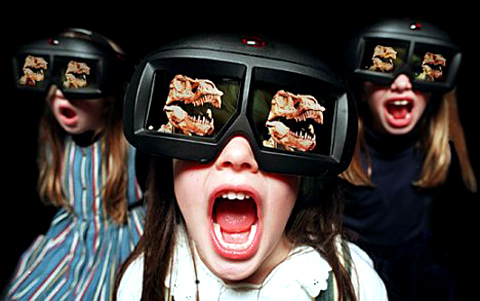
Attack of the 3D glasses


The World moves - develops and we develop. 

The World changes its views and we change ourselves to keep pace with it.

The World advances and we again we go along for the ride.

Change is the name of life. Today in the 21st century, life has sped up, nothing is slow. Everything is computerized or a more apt word digitalized. If we don't keep up in this race of competition was lose. We have to adapt to the current conditions if we are to make a place in this world. That, my dear fellows is the mantra of life as we know it.

Well the serious stuff aside, technology has come far from what it was decades ago, when we used large and heavy computer equipments and their were no such things as mini, macro, super computers and chip processors to enable the working ability of the computer. 

Today everything is 3-dimensional.

Everything from television, personal computers, video games(more suitable to be called playstations, x-box, wii) and motion cinema. Now 3d can mean a lot of things. Primarily or in the broad sense, the word 3D or the concept of 3D encompasses three elements of mathematics, specifically length, breadth, height but here we focus on 3D use in technology. The first time when 3D computer graphics....yes computer graphics was used in technology by William Fetter for his work in Boeing. The process of creating 3D computer graphics can be sequentially divided into three basic phases: 3D modeling which describes the process of forming the shape of an object, layout and animation which describes the motion and placement of objects within a scene, and 3D rendering which produces an image of an object. 

3D computer graphics (in contrast to 2D computer graphics) are graphics that use a three-dimensional representation of geometric data (often Cartesian) that is stored in the computer for the purposes of performing calculations and rendering 2D images. Such images may be stored for viewing later or displayed in real-time. Despite these differences, 3D computer graphics rely on many of the same algorithms as 2D computer vector graphics in the wire-frame model and 2D computer raster graphics in the final rendered display.

This 3 dimensional era of motion picture began in the late 1890s when British film pioneer William Friese-Greene filed a patent for a 3-D movie process. In his patent, two films were projected side by side on screen. The viewer looked through a stereoscope(a special motion picture camera system is used to record the images as seen from two perspectives or computer-generated imagery generates the two perspectives) to converge the two images. Because of the obtrusive mechanics behind this method, theatrical use was not practical. Frederick Eugene Ives patented his stereo camera rig in 1900. The camera had two lenses coupled together 1 3/4 inches apart. The earliest confirmed 3-D film shown to a paying audience was The Power of Love, which premiered at the Ambassador Hotel Theater in Los Angeles on September 27, 1922.

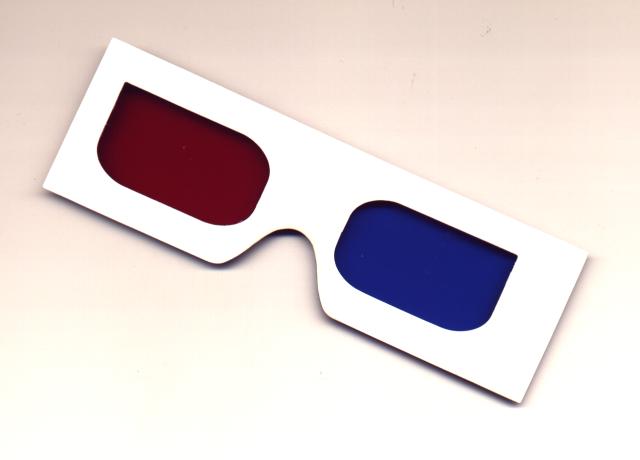
After all these technicalities with a slight tinge of history, 3d has become the GOD OF ENTERTAINMENT today. It seems that everywhere we look these days we see ads for the next big 3D movie. Whether it was 'Avatar,' 'Tron,' or 'Legend of the Guardians,' -- 3D films generally have high-production values and many ads to back them up and make sure they turn out successful. Consumers still get excited of the prospect in seeing these latest movies in "3D." But the tech has been around for a long time -- although in crude forms like the red-cyan anaglyph glasses that produced few shades of color. 

Despite these advances, 3D movies fell out of popularity by the middle of the decade. The reasons for the decline were mostly technical. 3D projectors required two reels to be displayed in perfect synchronization. Small errors in synchronization could easily lead to eye strain and headaches among viewers. Keeping reels in good repair was also an ongoing concern."

But with polarized glasses becoming available for theatre consumption and other improvements in the viewer experiences, as Schedeen points out, 3D movies are now a huge and profitable enterprise despite the higher equipment costs required. New innovations are also becoming a reality like glasses-free stereoscopic 3D viewing through "auto-stereoscopic displays.

Who or what do motion picture theaters owe their thanks? They owe their thanks to 3D films. In several of the reports produced on this very topic fortify this fact. Avatar was the fourth most cash making movie to ever hit the box office in about 17 days. Researchers reviewed the explanations coming up with how this will occur amid a recession as the one the united states in currently in. Avatar and other 3D films owe their success to the more expensive ticket costs to pay for the special glasses needed to watch. So with the recent state of ticket prices getting more and more expensive, home-theatre experiences beginning to match the theatre experience, and less people going to the movies these days -- producers and studios are looking at other ways to "reel" viewers in so to speak. Doing this through sensory-and-immersive experiences like stereoscopic 3D is a smart business move for them. Many consumers nowadays will only want to pay premium theatre prices to watch films only to the extent the movie offers a better, or more unique, experience. 3D still hasn't hit it big -- or caught on large -- at the home so the premium certainly is worth it for viewers and techies.

This past year a better version of the 3d tech is catching steam, Digital 3-D. 

Digital 3-D, which has slowly been gaining steam over the past few years, is finally ready for its closeup. Just about every top director and major studio is doing it--a dozen movies are slated to arrive this year, with dozens more in the works for 2010 and beyond. These are not just animations but live-action films, comedies, dramas and documentaries. Cameron is currently shooting for an Avatar sequel as well as a 3d Titanic. Disney and its Pixar studio are releasing five 3-D movies this year alone, including a 3-D-ified version of Toy Story. George Lucas hopes to rerelease his Star Wars movies in 3-D. And Steven Spielberg is currently shooting Tintin in it, with Peter Jackson doing the 3-D sequel next year.

Avatar was filmed in the old "Spruce Goose" hangar, the 16,000-sq.-ft. space where Howard Hughes built his wooden airplane. The film is set in the future, and most of the action takes place on a mythical planet, Pandora. The actors work in an empty studio; Pandora's lush jungle-aquatic environment is computer-generated in New Zealand by Jackson's special-effects company, Weta Digital, and added later. I couldn't tell what was real and what was animated--even knowing that the 9-ft.-tall blue, dappled dude couldn't possibly be real. The scenes were so startling and absorbing that the following morning, I had the peculiar sensation of wanting to return there, as if Pandora were real. Cameron wasn't surprised. One theory, he says, is that 3-D viewing "is so close to a real experience that it actually triggers memory creation in a way that 2-D viewing doesn't." His own theory is that stereoscopic viewing uses more neurons. That's possible. After watching all that 3-D, I was a bit wiped out. I was also totally entertained.

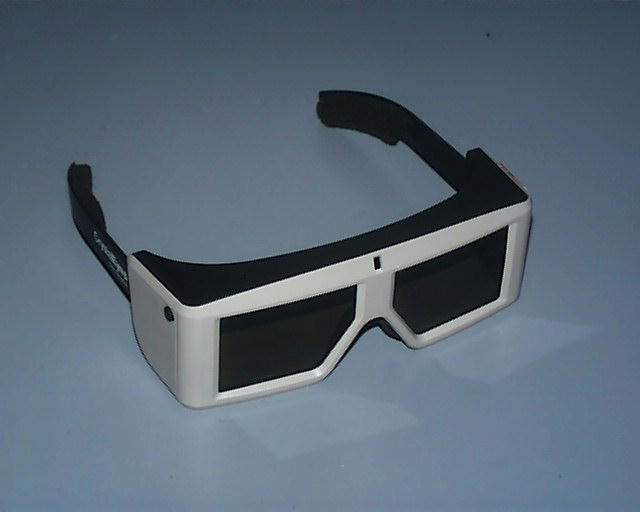
Those goggles are not only attacking the motion cinema but our television sets as well. Watching television in three dimensions seems a natural evolution. After all, we see the world in 3D. The difficulty is that, even despite recent advances, some elements of the viewing experience are less than ideal. While the red-and-blue 3D specs of the 1950s have made way for slightly more sophisticated polarized glasses, the fact remains that in order to watch most 3D televisions, you have to wear special headgear. That’s because in order to experience 3D, each eye needs to see the image slightly differently, as in real life, to build a multidimensional picture. Not only that, but the viewing angle for many 3D televisions is quite restrictive, with viewers needing to sit face-on at the correct range in order to see the three-dimensional image clearly. Although this works fine in cinemas, it’s less appropriate for living rooms.

The newest frontier in 3D technology is destined to be the family computer as a new glut of 3D displays and 3D monitors are set to try to enhance the user experience in ways never before imagined but don't expect them to be as affordable as current cheap LCD monitors. Most of the new 3D display technologies build on the current standard for 3D that people are used to seeing in the movie theater. In order to view the 3D images on the computer screen a user must wear a pair of polarized glasses. These are not the old style red and blue filtered glasses, but a newer version of 3D technology that uses a special kind of polarization to separate the images into two parts (one intended for each eye).

And I don’t think I need to elaborate on 3d in the gaming industry and its miracles in that particular arena.

3D has so revolutionized the mode of entertainment today.....that well its all about VIRTUAL REALITY.....and if 3D is the way out for the entertainment industrialist to make the big bucks and so be be it, 

LET THE GLASSES ROLL. 

Share/Bookmark

The King's Speech

I know this is very late review but had tests and i couldn't afford to be distracted. So, here it is.


Now The King's Speech clearly doesn't need me doing any kind of explanation, it is that good the best screenplay, with the best performances in the best film of the year. That’s all! The best piece of advice I can give you is to go and see this film as soon as you possibly can. This film is the whole package, every part of it from the tiny details about driving through fog to the grand speeches given by a King declaring WWII to the necessary comedic swearing that helps the Kind overcome his stutter — everything in this film is perfectly executed. Colin Firth, who rightfully won that golden guy (oscar) on 27th feb and won a Golden Globe and other accolades. Don’t let people tell you about this film, go and see it for yourself.


If you’re still unfamiliar with the story of King George VI, or subsequently The King’s Speech, here’s the official summary:


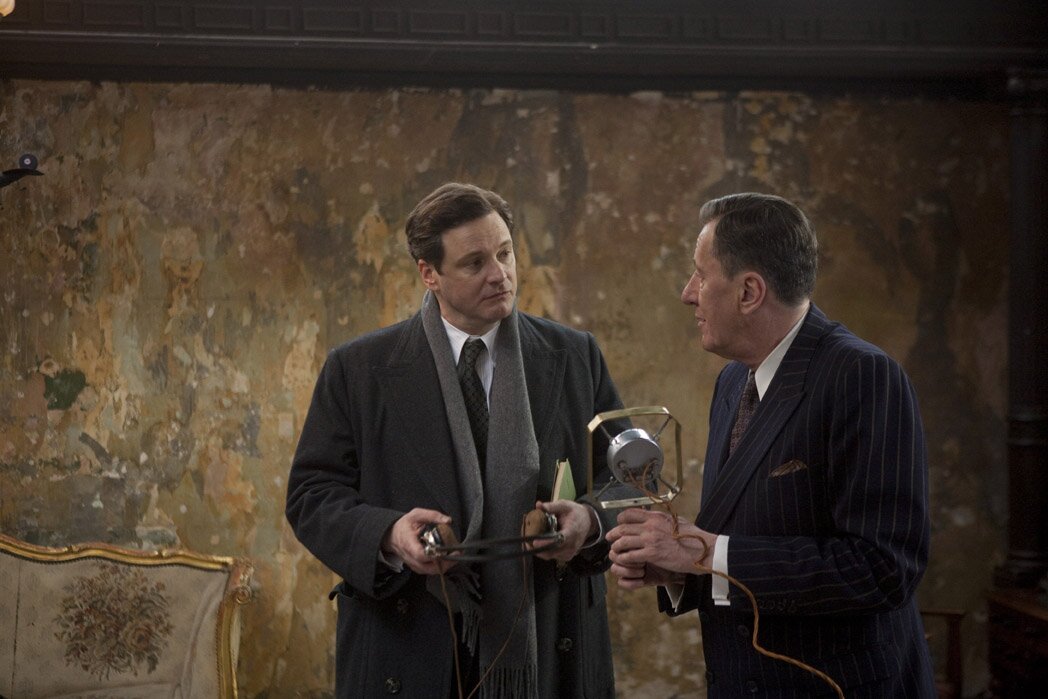
"After the death of his father King George V (Michael Gambon) and the scandalous abdication of King Edward VIII (Guy Pearce), Bertie (Colin Firth) who has suffered from a debilitating speech impediment all his life, is suddenly crowned King George VI of England. With his country on the brink of war and in desperate need of a leader, his wife, Elizabeth (Helena Bonham Carter), the future Queen Mother, arranges for her husband to see an eccentric speech therapist, Lionel Logue (Geoffrey Rush). After a rough start, the two delve into an unorthodox course of treatment and eventually form an unbreakable bond. With the support of Logue, his family, his government and Winston Churchill (Timothy Spall), the King will overcome his stammer and deliver a radio-address that inspires his people and unites them in battle. Based on the true story of King George VI, THE KING’S SPEECH follows the Royal Monarch’s quest to find his voice."


As mentioned in the summary, the entire movie revolves around the importance of voice. With the recent invention of the wireless radio, as well as the growing threat of Nazi Germany, King George VI is forced into a unique moment in history – where a King’s radio booth is suddenly more important than his throne.

Despite being the type of role typically labeled as “Oscar-shoe in” which it proved to be, Colin Firth’s performance as the stammering Prince Albert (George VI) is an honest portrayal that never oversteps the boundary between interpretation and caricature. While Firth’s stammering is certainly painful to listen to, it’s clear this is Hooper’s desired effect – and the director balances Albert’s stammers, as well as his succeeding frustration and anger, with a charming performance by Geoffrey Rush as the Australian speech therapist, Lionel Logue.


Very few films that take place during WWII can have Hitler play a supporting role to a speech impediment, and have jokes about Hitler’s strong speech play so well. The film is able to balance the severity of the situation with a very honest and realistic perspective. At times they tread on some possibly dangerous ground, but because they handle the topic with such grace, what could be considered rude or offensive is actually quite interesting, important and even at times humorous.

Solely, The King’s Speech concerns itself with the historical implications of a stutter. In one corner, it has Colin Firth’s Duke of York, soon to be George VI, wrestling with the speech impediment that has rendered public speaking a nightmare. In the other, we find Hitler, a leader whose very appeal lay in his oratorical skills. Closer to home, George V (Michael Gambon) is marching towards the gravest of silences, and the Duke’s brother, Edward (Guy Pearce), can talk solely of that Simpson woman. The need for someone to step up to the plate – or radio microphone – grows ever greater. This is a film in which the Empire is threatened not by war, but by dead air.


Drafted in to address this vacuum is Harley Street speech therapist Lionel Logue (Geoffrey Rush), a garrulous Australian with a fondness for garish interior design. The duke’s sessions with Logue form the film’s dramatic meat, but a full British repertory is on hand to observe their progress. Helena Bonham Carter is loving, eccentric, and nigh-perfect casting as the young Queen Mother; Derek Jacobi is a fretting Archbishop of Canterbury, approaching the coronation like a church fête threatened by rain; and Timothy Spall offers a sly Churchill.


Like many dramas that revolve around a “burgeoning friendship” dynamic, many of the best moments in The King’s Speech are centered around the dynamic between the two would-be friends as Logue attempts to draw the stubborn Prince Albert down from his high horse, in order to truly address the root of the problem (Albert’s fear of being King). In the process, the audience is treated to a number of great moments: some humorous, some painful, and others that are genuinely inspiring.

That said, at times a few of these moments can follow the three act historical drama a bit too closely – resulting in several predictable character arcs. Without giving anything away, the end of the first and second acts are each punctuated with some misunderstanding or regression that tears at Lionel and Albert’s friendship. Surely the pair had their ups and downs in real life, and the framework doesn’t ruin the film or even take much away from the viewer’s enjoyment, but, because of where they’re placed, these moments end up coming across as the contrived movements of the plot, instead of the organic transition of the characters.

At the end, The King’s Speech is a terrific film with great performances by the cast, as well as an inspiring, not to mention charming, story about a man who not only finds his voice, but finds his place as one of the most important leaders in history.


Share/Bookmark
Related Posts Plugin for WordPress, Blogger...