There has only been one franchise that has successfully launched a video game, become immensely popular and then become a passable film. That was Tomb Raider and Angelina Jolie had a lot to do with it.
Even harder to achieve is to turn a film into a successful video game and then remade into another film. Unsurprisingly, it is the comic books that lead the way. Batman (which was first a TV series) has been made into many films and also has a few different versions of games on various platforms.
Also successful is Spiderman and Fantastic Four as well as the comic book-based game Marvel Ultimate Alliance (all the superheroes in one giant story).
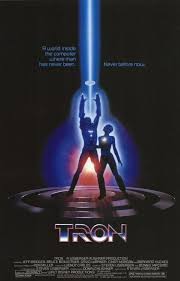
With the help of a popular toy (Lego), film franchise Indiana Jones was successfully transported from film to game console. Lego has done the same with Batman and Harry Potter. But before Lego, 3D, Xbox and even Nintendo it began with Tron. Made in 1982, Tron was ahead of its time. It was made into five different video games that featured the same cool transportation, the light cycle.
Joseph Kosinski’s renewed and reinvigorated TRON is certainly one of the most eagerly anticipated films since Avatar, and that anticipation is largely due to the avowed cult status of Steven Lisberger’s 1982 original. That film – with it’s mixture of archaic CGI, live action, and crude hand drawn animation – is arguably the most important and innovative special effects film ever made; but its simple plot and memorable performances also rendered it an unforgettable film in the hearts of film fans who worried about the sickly smooth aesthetics of Star Wars and the Rocky films.
To impress any of the legions of eager viewers awaiting his first feature, Kosinski had to do two things: create stunning visual effects that rivalled, and hopefully surpassed, those of Avatar; and create a memorable, quirky, and enjoyable story to hold it all together. He has succeeded wonderfully in the former, and perhaps predictably failed dismally in the latter.
The effects are truly ravishing. The 3D doesn’t kick in until Sam (Hedlund), the son of disappeared computer genius Kevin Flynn (Bridges), is transported into The Grid – a cyber-world created by Flynn, in which he has been trapped for the past 20 years. Over the space of those 20 years, the rudimentary, almost analogue, neon minimalism of the original film’s alternate reality has evolved over countless ‘cycles’ to produce a world so rich in glassy texture and sleek quicksilver cities that it more closely resembles a futuristic vision of earth than a more abstract idea of a ‘cyber world’ based on 0s and 1s. Kosinski’s background in architecture is clear – The Grid is a stunning futuristic vision, a cross between Philip K Dick and the Bauhaus. Kosinski was determined to honour the original film by avoiding complete reliance on CGI, so many of the sets are tangible, created out of concrete and glass, and you can feel their weight on the screen.

But is this an entirely positive point? This is supposed to be a vision of a ‘cyber world’ created entirely out of digital programmes. It necessarily needs to be anthropomorphised in order to be understood as a ‘mythic’ story, but is the chic interior design and the hog roast dinner entirely necessary? When Sam arrives on The Grid he is disrobed and prepared by four android-like ‘sirens’, and he later bumps into one of them as she is finishing her shift and leaving “the office” with an umbrella! What exactly is she protecting herself from in this instance? Cyber rain? There is something disappointingly easy about this interpretation of The Grid, which in the original film was a much more abstract space simply due to the limitations of technology. The wonders of the modern world have allowed Kosinski to render a truly outstanding vision on screen, but whether it is the right vision or the honest vision for TRON is debatable.
Two unquestionable triumphs should be mentioned though: the first is Daft Punk’s glitchy, techno score. Their infectious, cosmic dance pop is a perfect fusion of the organic and the ‘technologic’. It is at once cold and monotonous yet energised and vibrant. The second is the most important element of the TRON the disk battles and light cycles of legend are absolutely stunning, taking place in gigantic stadia before enormous crowds of baying ‘programmes’. The glistening quicksilver appearance of the bikes’ trails is breathtaking in 3D, and the battles themselves are easily as thrilling as anything James Cameron has ever created. The commend the film on their own, regardless of the success, or lack thereof, of the overall story.
The story, alas, falls in between the cracks of the wonderful aesthetic choices. The evolution of The Grid has been plagued by the controlling, cancerous influence of Clu – a ‘programme’ built by Flynn in his own image to create a ‘perfect world’ on The Grid, while Flynn was busy battling corporations in the real world. Clu’s pursuit of a non-existent ideal has led to a dangerous and dark world of dogma, destruction, and genocide. Sam’s unlikely arrival provides a brief opportunity for Flynn to defeat Clu and escape The Grid… and so the fight is on. This could have been a halfway interesting story, but it really is not. Essentially the story involves father and son, and Flynn’s adopted cyber-daughter Quorra, travelling across a barren landscape and getting into a few fracas before, well, winning. Somehow this random trip provides Sam with the cathartic, epiphanic inspiration he needed to “find himself” and turn his life around on returning to the real world. This is like a ‘Sci-fi action epic’ jus – a boiling pot of Gladiator, Star Wars, and The Matrix left on a high heat until all that is left is a sickly syrup of clichés and half-baked ideas.
The acting unfortunately, fails to save the piece. Jeff Bridges does nothing wrong as Flynn or, thanks to some wonderful visual effects, in his younger incarnation as Clu. But there has never been any doubt that Bridges’ talent lies in subtle and sincere character studies, rather than sci-fi epics. Garrett Hedlund is inoffensive as Sam, but he is either too young to too incapable of finding a way to save his vacuous character’s journey by adding some intangible dimension of emotional honesty
In the end, this is a travesty of a story and a failure of a sequel, but an absolute triumph for CGI… it is to the originalTRON what Avatar is to Ferngully.